
photos: Volkswagen
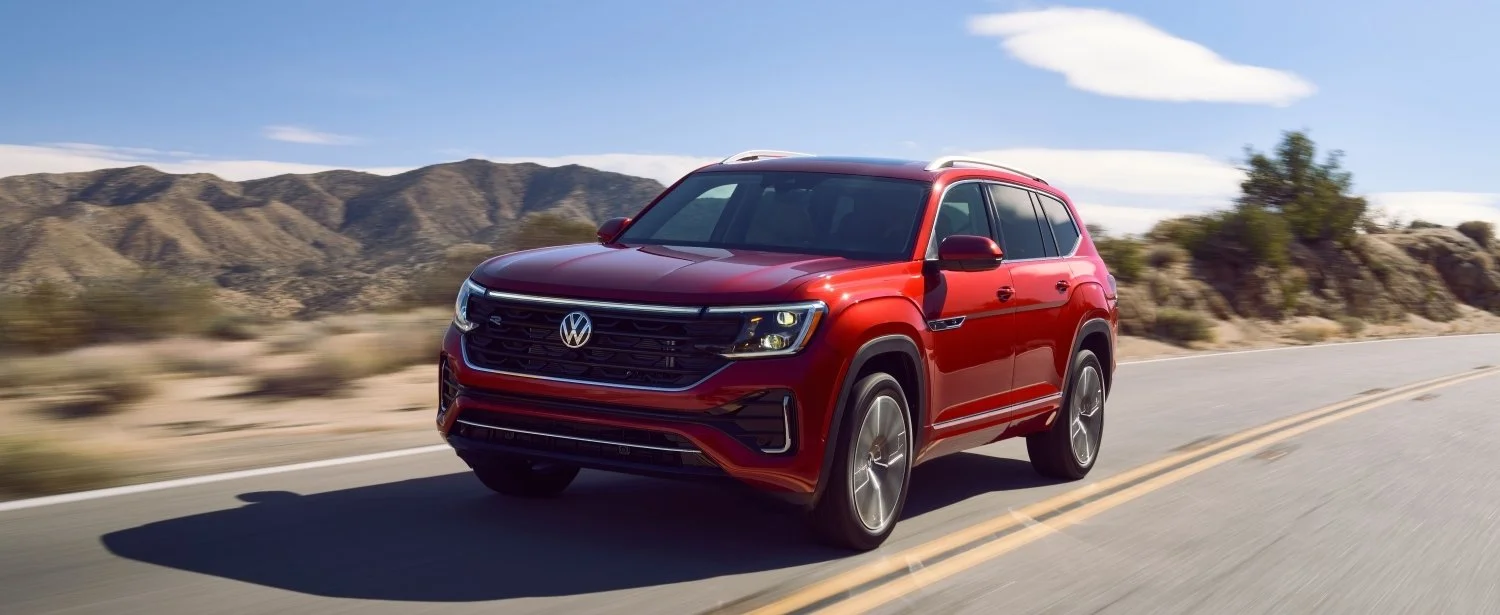
How it looks when you see on the street: Confident, but subdued. The angular accents are offset by the large VW badge that frames the hood. A third row represents a threshold in car buying. Whether it’s a third child or constant carpooling, the kids are probably the motivator to seek out an extended seating section. Not everyone is cut out for #vanlife — and no judgement either way. As a three-row SUV, Atlas vibe is steady and sure. It’s added new bits and pieces over the last couple years including a new engine option and facelift in 2024. It’s steady the course for the 2026 model year.
How it makes you feel when you get in: It’s roomy. The Atlas feels like it means business on the inside. Plastic is used sparingly and offset by the vehicle’s modern edges and stitching on seats. Lots of screens for getting business done and cupholder galore for sippy cups and water bottles.
How it drives: Atlas has a singular engine option — a 269-horse power turbocharged 2.0-liter four-cylinder. We’d recommend the 4-wheel drive version for anyone in an inclement climate. Despite its ample size, it’s easy to maneuver and does not perform like a truck getting around town.It scored a high safety rating from the National Highway Traffic Safety Administration
Space for people and things: Plenty of space. The first two rows are extra roomy. It has solid space for cargo that translates to 20.6 cubic feet of cargo space behind the third row and to 55.5 cubic feet when seats fold down. It also comes with a two row option, and cabin seating.
What should you compare it to: Ford Explorer, Honda Pilot, and the Kia Telluride. The smaller version is the aggressive looking Volkswagen Atlas Cross Sport.
How much does it cost: On the base end it starts at about $40,000 and reaches up to mid $50k for high end trim packages.